Pineapple Support Welcomes STI Hero as Official Sponsor 

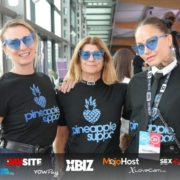
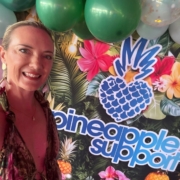
Pineapple Support, the adult industry’s leading mental health nonprofit, is proud to announce that STI Hero, a service of Better Life Science, has joined as an official sponsor. The partnership reflects a shared commitment to the health, wellbeing, and dignity of adult industry professionals worldwide. 

STI Hero is dedicated to providing accessible, compassionate sexual health services to performers, and its decision to extend that commitment to mental health support through this sponsorship marks a meaningful step to recognise the importance of mental and physical health. 

“We’re proud to partner with Pineapple Support to advance mental health and wellness in the adult industry,” says Angela Brock from Better Life Science. “This reflects our commitment at Better Life Science to go beyond STI testing and support performers with the care and compassion they deserve.” 

Founded in 2018 by British performer Leya Tanit following a series of tragic losses in the adult industry, Pineapple Support is a 501(c)(3) nonprofit that has connected more than 19,000 adult industry professionals with free and low-cost therapy, counseling, and emotional support. 

“We are delighted to welcome STI Hero and Better Life Science to our growing family of sponsors,” says Tanit. “The connection between physical and mental health is undeniable, and having a partner who understands and supports both is incredibly meaningful. Together, we can ensure that more performers have access to the holistic care they need and deserve.” 

Businesses interested in becoming an official sponsor of Pineapple Support can view available packages at pineapplesupport.org/sponsorship. 


About Pineapple Support Founded in 2018, Pineapple Support is a 501(c)(3) nonprofit organisation dedicated to providing free and low-cost mental health support to adult industry professionals worldwide. To date, the organisation has connected more than 19,000 individuals with therapy, counselling, and emotional support services. 

About STI Hero / Better Life Science STI Hero is a sexual health testing service provided by Better Life Science, dedicated to offering accessible, compassionate care to adult industry professionals. 

The GRABBYS in Torremolinos raised $13,406 for Pineapple Support’s mental health services. 

We are thrilled to share that our charity auction at The GRABBYS in Torremolinos raised $13,406 for Pineapple Support’s mental health services. 

The evening at Hotel Ritual on April 23rd was electric from start to finish. DJ Bonnie Locket set the tone with an incredible set, and hosts Sister Roma and Austin Ponce drove competitive bidding all the way to the final seconds. This evening was a powerful demonstration of what this community can do when it comes together for a cause that matters. 

Our thanks go to every single person who bid, donated, and showed up — and to the generous donors who made the auction possible: Falcon Studios/NakedSword, GRABBYS Europe, KINK.com, The Handy, SayUncle, CreatorHelper, F2F.com, MojoHost, Craig Lomas, and Pineapple Support. 

Every dollar raised goes directly towards ensuring that adult industry professionals have access to the mental health care they deserve. To see our community come together in this way means everything to us and to the thousands of people we serve. 

Pineapple Support Launches New, More Accessible Corporate Wellbeing Services

We’re excited to announce the launch of Wellbeing by PS, a new corporate wellbeing service from Pineapple Support designed to help companies provide flexible, on-demand mental health support for their teams. 

Created with high-risk and underserved industries in mind, Wellbeing by PS allows businesses to pre-purchase 30-minute wellbeing check-ins, 50-minute therapy sessions, or facilitatedsupport groups, with no fixed annual contracts. 

Services are delivered anonymously through our global network of 600+ registered mental health professionals, giving teams direct access to meaningful support when they need it most. All proceeds are reinvested into Pineapple Support’s nonprofit mental health services, helping us continue to provide free and low-cost care across the industry. 

Wellbeing by PS offers a practical, accessible way for companies to prioritize mental health while directly contributing to the sustainability of vital support services within our community. 


We Talk About Diversity, But We Rarely Talk About What Inclusion Feels Like

In many organisations, “diversity” is the visible metric. We count gender, race, age, orientation, disability status. We celebrate quotas, “firsts”, diversity hiring initiatives. And yet, the harder conversation often goes unspoken: What does it feel like to be included? When I founded Pineapple Support more than a decade ago, one of my core convictions was that mental-health, wellbeing and safety in the adult entertainment industry (and all industries) can only be built when people don’t just exist in a space, but belong in it. Belonging arises when inclusion is no longer a policy or the “extra” but the lived experience.

1. Diversity vs Inclusion — the lived difference

  • Diversity invites “who’s in the room?” – inclusion asks “does each person feel safe, visible and valued in the room?”
  • Research shows that while companies may track demographic diversity, the sentiment around inclusion is often far weaker: one McKinsey study found that while 52 % of respondents felt positive about their organisation’s diversity efforts, only 29 % felt positive about inclusion. McKinsey & Company+1
  • The impact of inclusion isn’t just moral, it correlates with business performance: inclusive companies report higher levels of innovation, better decision making and stronger engagement. Synergist+1

So we must shift the conversation from “we have x % women/minorities” to “how does every individual experience being seen, heard, supported, trusted?”

2. What inclusion feels like (and what it doesn’t)

Here are some lived signals of inclusion and their opposites. Feels like inclusion when someone…

  • can speak up without being punished, sidelined or ignored.
  • sees their identity reflected in the team and leadership, and sees others like them succeeding.
  • receives feedback and development, not just a ‘token’ role.
  • has genuine belonging: they bring their whole self to work, not just a “safe” version.
  • feels that their contributions matter, not just their presence.

Feels like exclusion when someone…

  • self-censors or hides aspects of themselves (identity, experience) to fit in.
  • perceives themselves as the “only one” from their group and internalises performance pressure.
  • feels invisible or sidelined: difficult to get opportunities, ambiguous feedback, fewer mentoring or sponsorship relationships.
  • experiences micro-aggressions or belittling comments, or watches others do so without action.
  • doesn’t feel safe/supported when things go wrong.

These aren’t just “nice to have” shades of workplace comfort. They affect mental health, burnout, retention, performance and growth. For creators, agency staff and compliance/moderation teams in the adult industry, where stigma, boundary-work, and emotional labour are intense, inclusion is a cornerstone of wellbeing.

3. Why inclusion matters for wellbeing, and especially in underserved sectors

In the adult-industry context (and many other marginalised-identity or high-stress fields), the stakes are higher. People may face industry stigma, intersecting identities (gender, race, sexual orientation, neurodivergence), performance pressure, emotional risks, burnout, and in the case of compliance/moderation roles, secondary trauma.

When inclusion is present: people report higher engagement, less burnout, more psychological safety and willingness to ask for help. Achievers+1

When it’s absent: silence, fear, isolation, attrition. The cost of “just being included in the head-count” is real.

4. What leaders and organisations can do to move from diversity ➝ inclusion

Here are some action-oriented steps I’ve seen work:

  • Shift focus from numbers to experience. Yes, metrics matter (representation, hiring, promotion) but ask: “Do people feel they belong? Do they feel psychologically safe?”
  • Cultivate psychological safety. Create spaces where people can raise concerns, make mistakes, bring their full identity.
  • Sponsor & mentor across difference. Representation helps, but inclusion means development, access to real opportunity and decision-making roles.
  • Check and change culture, not just policy. Inclusion lives in how people feel day-to-day: in conversations, in who speaks, who is listened to, how feedback is given, how mistakes are handled.
  • Belonging is ongoing. Inclusion isn’t a once-off initiative. It requires ongoing attention, lived leadership, feedback loops.
  • Be explicit about intersectionality and hidden norms. Inclusion means recognising that people bring complex identities, and culture may carry hidden norms (e.g., neurotypical, cisgender, able-bodied).
  • Embed wellbeing into inclusion. In sectors like adult entertainment, compliance/moderation and creator work, the emotional and mental health component is intrinsic. Inclusion means creating a safe environment for wellbeing.

5. My challenge to you

If you are leading a team, a project, an organisation – I challenge you to ask this not-yet-popular question: “How does inclusion feel here?”

  • What story would someone from an underrepresented identity tell about their experience right now?
  • If they said “I don’t feel valued the same way”, would you recognise it? • What changes would make their experience fundamentally different – not just in policy, but in how they wake up and walk into the work-day?

In our sector, representing creators, studios, agencies, moderation teams, inclusion isn’t “extra”. It is foundational to dignity, safety, performance and wellbeing.

Talking about diversity is important. But if we don’t also talk about what inclusion feels like,and what it doesn’t, we risk filling spaces with silent voices that leave anyway, or worse, who suffer quietly.

At Pineapple Support, our mission is clear: every individual deserves to feel seen, valued and safe. Inclusion is how we make that real.

with love,

Leya

Pineapple Support and Falcon/NakedSword Raise $50,000 for Men’s Mental Health with Star-Studded Event and Campaign

Pineapple Support, the adult industry’s leading mental health non-profit, partnered with Falcon/NakedSword in November for a powerful initiative in support of Men’s Mental Health Month. The collaboration raised an incredible $52,000 through a social media awareness campaign and the glamorous Ms. Pineapple Cabaret, held in Palm Springs.

The event, which featured leading adult creators and world-class cabaret performers, was a celebration of resilience, vulnerability, and community. All proceeds from the Ms. Pineapple Cabaret went directly to Pineapple Support, helping to fund free and low-cost mental health services for adult industry professionals.

“Our fifth annual Mx. Pineapple event was our most meaningful and successful yet, raising more than $50,000 to support mental health services for adult performers and industry professionals,” said Falcon | NakedSword President and CEO Tim Valenti. “What made the evening particularly special was the overwhelming sense of community: Celebrity hosts, A-list entertainers, and beloved performers coming together in Palm Springs, surrounded by a sold-out, standing-room-only crowd, all united by a shared commitment to care for each other. 

Throughout the month, Falcon/NakedSword and Pineapple Support shared heartfelt messages, stories of strength, and honest conversations across their platforms. The campaign aimed to raise awareness of the unique challenges men face regarding mental health, particularly in adult entertainment, while encouraging open dialogue and reminding performers that support is available.

“Men’s mental health is a crucial issue that too often goes unaddressed, especially in the adult entertainment industry,” says Leya Tanit, founder and CEO of Pineapple Support. “Through our partnership with Falcon/NakedSword, we’ve been able to use our platform to foster open dialogue, provide resources, and remind men that they are not alone in their struggles.”

Pineapple Support was founded by British performer Leya Tanit in 2018, after a string of losses in the adult industry from depression and other mental illnesses. The organization, a qualified 501(c)(3) tax-exempt organization in the United States, has connected over 18,000 adult performers to mental health services, including free and low-cost therapy, counseling, and emotional support.

“This outpouring of generosity will directly help PineappleSupport.org to continue its essential work providing life-changing mental health resources to those who need them most,” said Valenti. “We are deeply grateful to our co-presenting sponsor, Mr. Man; our platinum sponsors Flirt4Free, Streamate, and Fleshjack; our gold sponsors ASGmax, No Monkeys, Chaturbate, MENatPLAY, GayVN, Erotik, Clips4Sale, Say Uncle, and Grooby; and our community partners, including Eight4Nine Restaurant & Lounge, Desert AIDS Project, CCBC Resort Hotel, Fort Troff, and Swiss Navy. Their support and belief in this mission make this work possible.”

Pineapple Support and Falcon | NakedSword are already planning a bigger and expanded Mx. Pineapple event in 2026. Those interested in getting involved or learning more should contact Toby J Morris, Falcon | NakedSword VP Business Development & Marketing.

To learn more about becoming a sponsor of Pineapple Support, please visit https://pineapplesupport.org/sponsorship. Details about additional ways to support, as a company or individual, can be found on the organization’s website https://pineapplesupport.org/


End of Year Review for 2025

In a year marked by financial strain across the industry and rising mental health needs, Pineapple Support continued to expand our reach and deliver vital care to thousands of creators worldwide. Since our inception in 2018, we have supported nearly 20,000 individuals across the online adult industry. However, demand for our services continues to rise, and the importance of the industry’s support becomes ever more crucial. Together, we can bring about positive change and ensure that no one in our community is ever left without care.

During this year alone, we have:

  • Connected 4,352 performers, producers, and other members of the adult community with emotional support and therapy
  • Provided over 18,000 one-on-one therapy sessions to adult workers
  • Recruited 121 new therapists worldwide
  • Welcomed 1,925 new online therapy users, 158 new emotional support text users, and 329 new support group attendees
  • Reached 1,940 industry professionals through workshops, presentations, and training
  • Delivered four free corporate training sessions for our sponsor partners
  • Delivered $2.3 million in direct therapy, emotional support, and essential mental health services to date

Again this year, 78% of all donations went directly toward providing care, including therapy sessions, crisis support, emotional support text services, support groups, and wellness programming. This places Pineapple Support well above the nonprofit-sector average and demonstrates our continued commitment to putting donor dollars exactly where they’re needed most.


Mental Health Trends

After four years of heightened demand following the emotional and social impact of the COVID-19 crisis, requests for support related to anxiety and depression seem to have stabilised. While these issues remain the two most common drivers of support requests, the stabilisation allows us to redirect resources toward emerging areas of need.

A notable trend this year has been the increase in individuals seeking help for ADHD, autism, and OCD. This rise reflects broader social patterns: increased visibility and discussion of neurodiversity on social media, greater public understanding, and reduced stigma around seeking evaluation or support. Creators report challenges such as emotional dysregulation, executive functioning difficulties, sensory overwhelm, identity-related confusion, and misunderstanding or dismissal from non-industry providers. These needs require specialised, affirming care and our growing network of neurodiversity-experienced therapists has been essential in meeting them.

We also continue to see rising numbers of resource users seeking support for burnout and creative fatigue, online harassment and stalking, grief and loss, complex relationship dynamics, and isolation caused by stigma or discrimination.


Levels of Need

When applying for support through Pineapple Support, individuals described their mental health needs as follows: 

  • 19% reported their situation as urgent, requiring immediate attention; 
  • 36% were seriously in need of support, often dealing with acute stress, trauma, or severe emotional distress
  • 37% identified as in need of support, seeking help to manage ongoing mental health challenges
  • 8% requested a check-up, typically for preventative care or early intervention. 

These numbers reflect a community where over half of applicants are experiencing high or critical levels of distress, underscoring the importance of timely access to safe, affirming mental health care.

In comparison to last year, these figures indicate that resource users are taking a more proactive approach to their mental health care. This is a hugely positive shift towards longevity and a healthier industry. Additionally, we completely cleared our waitlist in August 2025. This had been a goal since the beginning of 2024 when, due to excess need, we capped the number of people receiving therapy at any one time to 350. We are now maintaining a zero waitlist and connecting users to a therapist within 7–10 days of application, ensuring no one slips through the gaps.


In-Person Events

This year, we were a strong and visible presence at major industry events, including the AVN Adult Entertainment Expo, XBIZ Miami, Los Angeles, and Amsterdam, the EXXXOTICA Expo, the TES Affiliate Conferences in Seville and Prague, and the Bucharest Summit. In addition to participating in panels, roundtable discussions, and mental health conversations, we hosted private retreat spaces designed for models and creators to unwind, reconnect, and access mental health guidance.

Our most recent event, the Mx Pineapple Pageant hosted by Falcon Studios/NakedSword, was nothing short of extraordinary. In a single night, the event raised an incredible $50,000, all of which directly supports free and low-cost mental health services for creators around the world.


Corporate Training and Wellbeing by PS

In addition to providing direct mental health resources to creators, Pineapple Support continues to strengthen the industry at its foundation by equipping companies, teams, and platforms with the tools they need to better support the people who work with them. This year, we delivered four free corporate training sessions to our sponsor partners, focusing on mental health awareness in high-risk industries, crisis response and escalation, creator wellbeing and burnout prevention, and trauma-informed communication.

One of our most meaningful developments this year was the launch of Wellbeing by PS, our dedicated corporate wellbeing initiative designed to extend support beyond creators and into the companies that power the adult industry. Wellbeing by PS provides businesses with tailored wellbeing sessions for staff, cultural competency training, mental health education, and guidance for moderation, compliance, and high-stress teams. By expanding into corporate wellbeing, we are not only enhancing workplace culture but also creating sustainable new pathways for funding mental health services for creators.


Our Funding Goal for 2026

In 2025, we saw a significant rise in both need and usage across all service areas. As a result, we spent 19% more on mental health resources than in 2024. To continue meeting the needs of creators and to prevent the waitlist from growing, we aim to raise an additional $110,000 in 2026. This goal includes income generated through Wellbeing by PS, which will help diversify our funding streams and reduce reliance on traditional sponsorship alone.

This funding will ensure we can provide timely access to free and low-cost therapy, maintain our emotional support text service, run support groups and educational workshops, offer crisis care for those in urgent need, support creators in Latin America and underserved regions, continue delivering free corporate trainings to sponsors, strengthen and expand our global network of specialised therapists, and update internal technology systems and processes.


Sponsors

2025 has been another impactful year at Pineapple Support, and none of it would have been possible without our sponsors’ generous contributions. These partnerships, along with our loyal renewing members, have been fundamental in sustaining our work, especially during a year of widespread funding cuts across the industry.

The collective support from our sponsors, therapists, staff, and community has been vital in connecting numerous workers with essential mental health services. We are deeply grateful for every form of support received. Your generosity continues to be the lifeline that not only supports but transforms lives.


With love and respect,


Leya Tanit

President, Pineapple Support


Leading with Empathy isn’t Soft. It’s Strategic, Necessary, and Often Exhausting

I can tell you right now – I’m f*cked.
Too tired to talk to friends.
Too tired to check in on family.
Too tired to even play with my dogs.

Today has been a blur of spreadsheets, last-minute donation emails, and conversations with team members. A day spent listening, supporting, fixing, holding. All of it done with as much compassion, and as big a smile,  as my current capacity allows.

And here’s the truth most leaders don’t say out loud:

Leading with empathy doesn’t mean being endlessly calm, infinitely patient, or having all the answers.
It means caring enough to keep showing up even when your internal battery is flashing red.

At Pineapple, we’ve built everything on the belief that people need to feel seen, heard, and held in order to thrive. And if we’re going to practice what we preach as an organisation (though clearly not as individuals today), that applies just as much to our team as it does to the community we serve.

Every email deserves a little care.
Every meeting deserves presence.
Every person deserves to feel safe being honest, even on the messy days, the tired days, the “barely functioning” days.

Because empathy in leadership isn’t a softness; it’s a strategy.
A sustainable one.

When we lead with empathy, we build resilience, in ourselves, our teams, and our companies. It’s not about wellness perks or feel-good slogans. It’s about creating cultures where compassion drives performance, and care is woven into the foundation of how things get done.

That’s what keeps people connected.
That’s what builds strong teams.
That’s what turns organisations into communities.

And honestly?
That’s what makes Pineapple what it is.

Even on days like today, when my tank is empty and my brain feels like soup, I can feel the strength of the culture we’ve built holding everything steady. Empathy doesn’t just support people, it sustains the mission.

And tomorrow, when I’m a little less tired, I’ll get back to practising it with myself too.

with love,

Leya

AdultTime Renews Sponsorship of Pineapple Support at the Silver Level

Pineapple Support, the adult industry’s leading mental health nonprofit, is pleased to announce that AdultTimehas renewed its support as a silver-level sponsor. The premium streaming platform joins over seventy adult businesses and organizations in committing funds and resources to the organization.


“We are proud to continue our support and commitment to Pineapple Support and the important services they provide to our production community,” says Bree Mills, Adult Time’s Chief Creative Officer.


Pineapple Support was founded by Leya Tanit in 2018, after a string of losses in the adult industry from depression and other mental illnesses. The organization, a qualified 501(c)(3) tax-exempt organization in the United States, has connected over 16,000 adult performers to mental health services, including free and low-cost therapy, counseling, and emotional support.


“We are grateful to AdultTime for continuing to support our mission,” says Tanit. “Long-term, dedicated sponsors allow us to do the long-term planning and resource development necessary for building an organization the community can depend on. AdultTime’s ongoing commitment reflects a deep understanding of the importance of performer wellbeing.”


To learn more about becoming a sponsor of Pineapple Support, please visit https://pineapplesupport.org/sponsorship. Details about additional ways to support, as a company or individual, can be found on the organization’s website https://pineapplesupport.org/.

Why We All Feel Like Imposters (But Rarely Say It Out Loud)

There’s a phrase most of us carry quietly, tucked somewhere between our ambition and our exhaustion:

“I feel like a fraud.”

Imposter syndrome, or Imposter Phenomenon, is defined as:

A persistent doubt concerning one’s abilities or accomplishments, accompanied by the fear of being exposed as a fraud, despite evidence of ongoing success.

Sound familiar?

That voice — sometimes a whisper, sometimes a roar — that says:
“You’re not good enough… who do you think you are?”

Even after nearly eight years of building something no one had done before, a global nonprofit supporting mental health in one of the most stigmatized industries, I still hear it. I hear it on stages I’ve been flown across the world to speak on. In rooms full of peers discussing topics I’ve lived, researched, and shaped. Even after creating resources that didn’t exist until Pineapple Support built them, and fighting for change when it felt impossible.

And still, that voice creeps in:

“People don’t think you’re capable. Maybe they’re right.”

Brené Brown puts it perfectly:

“Shame is the most powerful, master emotion. It’s the fear that we’re not good enough.”

Imposter syndrome is shame in motion, a tangled knot of fear and self-doubt that tightens in the spaces where we stretch, grow, and lead.

The most ridiculous part? Almost everyone is quietly carrying it, convinced they’re the only one who feels this way.

So why do we feel like imposters?

Psychologists Pauline Clance and Suzanne Imes, who first identified imposter syndrome in the 1970s, found that high-achieving people often attribute their success to luck, timing, or external factors, anything but their own abilities. Up to 70% of people will experience these feelings at some point.

Here’s why:

1. Our brains are wired for comparison.
Evolution taught us to constantly assess our place in the group. Social media has turned that into a never-ending highlight reel.

2. New territory triggers doubt.
When we’re learning something new, even if we’re good at it, discomfort gets misinterpreted as incompetence.

3. We internalize early messages.
If we grew up believing we had to be perfect to be worthy, adulthood becomes a minefield of “don’t mess this up.”

4. Success feels unfamiliar.
Dr. Valerie Young explains that if you’ve spent most of your life feeling “not that person,” succeeding can feel like a clerical error, not a win.

5. We glorify overworking.
We equate value with exhaustion. If we slow down, the fear creeps in:
“If I stop, they’ll see I’m not good enough.”

And yet, none of these beliefs reflect the truth of who we are or what we’ve achieved.

So what is success, really?

We measure it by titles, hours worked, milestones hit.
Rarely by impact, fulfillment, or balance.

Imposter syndrome convinces us we must outrun our insecurity, work harder, push further, prove ourselves endlessly, just to earn space we’ve already earned.

But as Stef Sword-Williams writes in Fck Being Humble*:

“We spend so much time second-guessing ourselves that we forget other people are probably doing the same. We’re all winging it; some of us are just louder about it.”

And she’s right.

I am still winging it.
We all are.

Whether you’re an innovator, disruptor, thought leader, or simply someone trying to change your corner of the world, most of the journey is figuring it out as you go.

So why don’t we talk about it?

Because imposter syndrome thrives in silence.
We bottle it up, smile through it, and pray no one notices.

But what if we told the truth?

What if we normalized saying:

“I’ve achieved incredible things… and sometimes I still feel like I have no idea what I’m doing.”

Imagine the shift, the collective exhale,  if more of us said it out loud.
Because not feeling “enough” isn’t a sign we’re failing.
It’s a sign we’re human.

So here’s my rebellion against imposter syndrome:

I’m choosing to acknowledge it.
To speak it.
To own it.

To remind myself, and you, that we belong in the rooms we’ve worked so hard to enter, even when our inner critic tries to convince us otherwise.

Because at the end of the day, we’re all just people trying our best.
And that is more than enough.

with love,

Leya

I thought I had to be perfect to lead

For most of my career, I carried an unspoken rule:
Leaders have to have it all together.

No cracks.
No doubts.
No messy human moments.

Just competence, confidence, and a perfectly polished exterior.

There are quite a number of leaders I know who project exactly that, the kind of poised, untouchable professionalism that looks effortless. One day, when I grow up, maybe I’ll be just like them.

But today?
I’m choosing to embrace the version of myself I’ve always been:
a little quirky, a little sideways, a little messy, and completely real.

Like many founders (and as I’ve spoken about openly before), I am no stranger to imposter syndrome. I can walk into a room full of brilliant minds, CEOs, therapists, compliance directors, creators, and still feel like the teenager who never quite fit in. Add to that the reality of being a high-masking autistic woman running a mental-health charity in an industry the world doesn’t always treat kindly… and, well, you can imagine the pressure I put on myself.

To those who lead from the front and make it look easy:
I salute you. Truly.

But perfection isn’t the sign of great leadership.
Humanity is.

Everyone is learning.
Everyone is trying.
Everyone is human.

This is something I spoke about recently during a Wellbeing by PS training:
If you want a healthy team, you can’t just tell them it’s okay to ask for help.
you have to show them.

People don’t learn from policies.
They learn from permission.
And they learn permission by witnessing vulnerability.

When I stopped trying to tuck away the “odd” parts of myself, the quirks, the humour, the autistic wiring that makes my brain work at slightly unexpected angles, something surprising happened:

I started forming stronger connections.

At shows, in boardrooms, at conferences (9am with terrible coffee or 9pm with terrible wine), the more I allowed the real me to show up, the more others showed up as themselves too.

Conversations became more honest.
Collaborations became smoother.
Relationships became deeper.

And, to my knowledge, no one has run away yet.

Of course, professionalism still matters.
Boundaries matter.
Consistency matters.

But I’ve learned that professionalism doesn’t require dimming your light, even when that light is quirky, chaotic, or unmistakably “Leya.”

When you let people see who you really are, they respond with who they are.
And strangely enough, that makes everything, leadership, teamwork, community, so much stronger.

Because most people aren’t looking for a flawless leader.

They’re looking for a human one.

with love,

Leya