Why Even Bother?

Creating a world where asking for help feels brave, not broken | Building safer spaces and turning stigma into support

Someone once asked me, “Why do you care so much?”. It wasn’t meant unkindly , it was a sincere question, and it stopped me, because the answer isn’t simple.

My journey in the adult industry began almost immediately after I finished school, and it was the first place where being a square peg in a round hole wasn’t just accepted, it was celebrated.

Growing up, I was always the misfit. From nursery until the day I left school, I never quite fit the script that everyone else seemed to understand. The world often felt sharp, alien, and isolating.

Until I found this community.

The adult industry was the first place I felt seen. Truly seen. I was surrounded by people who didn’t judge, who accepted me exactly as I was. For the first time, I felt safe being myself, bold, creative, messy, complicated, and still belonging.

That acceptance helped me blossom. It gave me confidence. It gave me identity. It helped shape the person I am today.

Fast forward nearly 20 years to 2017, and the industry was hit by a series of heartbreaking losses. One after another, we lost people we cared about deeply. I watched a community I loved falling through the cracks, no support, no resources, no safety net.

I saw the very people who had lifted me up now struggling quietly, invisibly, still carrying the weight of stigma everywhere they went. People who give so much of themselves to bring others pleasure, yet are denied empathy, respect, or even basic dignity.

And when you witness suffering in a community that once made you feel whole, you don’t just look away.

It broke my heart. If I’m honest, it still does.

That heartbreak became my motivation. Giving back didn’t feel like a choice, it felt like a responsibility.

Over time, this work,  building Pineapple Support, advocating for mental health, fighting stigma, has become part of my identity. It’s been my teacher, my mirror, my greatest challenge, and my proudest creation.

It’s also forced me to recognise my own privilege.
I have a voice that gets heard. Not everyone does.

So I made it my mission to use that voice, loudly, persistently, and unapologetically, for those who feel too tired, too afraid, too unseen to speak up for themselves.

So, why do I care so much?

Because this industry gave me my first sense of belonging.
Because it continues to give to me in ways I can barely explain.
Because every day I meet people with the same spark I once had, and I know how easily that spark can dim without support.

Caring isn’t just part of my work; it’s part of who I am.
This community shaped me.

And as long as I’m here, I’ll keep giving back to it.

with love,

Leya

Leadership, Shame, and the Sacred Hidden in the Chaos

Lately, I’ve been tired. Not burnt out, though if we’re being honest, maybe just a little, but purposefully tired. Soul-tired in the way you get when you’re pouring yourself into work that matters. Between maintaining our existing resources and preparing to launch multiple new projects over the next six months, our team is building something big. Something that saves lives, shifts perspectives, and nudges an entire industry toward compassion.

And yet, even in the midst of that purpose, I find myself sitting with shame.

Shame that whispers I should be doing more, being more, holding everything together with more grace and less chaos. Shame for being human in a leadership role that can feel like it demands something superhuman. When I miscommunicate or make assumptions, I find myself wishing I could shield my team from the fallout. They’re brilliant, passionate, and dedicated, and the truth is, I set the pace. I create the workload. I drive the vision that asks so much of all of us.

But I’m learning, slowly, imperfectly, to meet that shame with empathy.

Instead of asking, Why aren’t you doing more?
I’m asking, What do you need right now?

Instead of slipping into criticism, I’m practicing compassion.

It’s messy. It’s uncomfortable. But it’s necessary. Because when you’re leading something that means the world to you, self-compassion becomes a leadership skill. A survival skill, even.

I want to say it gets easier, but it doesn’t. The goals grow. The pressure builds. The stakes rise.
But so does the impact.

And these next goals? They’re huge.
And I’ve got this.
We’ve got this.

I am endlessly grateful to every person walking this path with me, the team that believes, the partners who trust us, the community that keeps reminding us why the work matters.

The truth is, I haven’t been practicing everything we preach lately. I still make it to the gym, routine is my anchor, but after work, I crash. My social battery is empty. I haven’t checked in on the people I love, and yes, I feel guilty about that too.

But here’s what I do know:

The way we speak to ourselves matters.
Self-leadership matters.

If I can’t offer myself grace, how can I extend it to my team?
How can I offer it to the community we serve?

This work is messy.
But it’s sacred too.

Sometimes the sacred hides in spreadsheets and schedules.
In Slack messages and strategy decks.
In showing up even when you’re tired —
especially when you’re tired.

So here’s to the leaders who show up with empathy.
Here’s to the teams who hold big visions with open hearts.
Here’s to remembering that softness is strength
and rest is part of the mission.

with love,

Leya

Self-Love, Resilience, and Being True to Who You Are (Even When It’s Really Hard)

Some days I’m neck-deep in the work of Gabor Maté. Other days, I’m crawling back to Brené Brown like the emotionally-exhausted, purpose-driven nonprofit CEO that I am.

Today is a Brené day.

There’s one quote of hers that I return to whenever the noise gets louder than the purpose — when the criticism, assumptions, and unsolicited opinions start to feel heavier than the mission:

“If you are not in the arena getting your ass kicked on occasion, I am not interested in or open to your feedback… There are a million cheap seats in the world today filled with people who will never be brave with their own lives, but will spend every ounce of energy they have hurling advice and judgement at those of us trying to dare greatly.”

Working in and advocating for the adult industry means that judgment is never far away. People form opinions quickly — about creators, about the industry, about the work we do at Pineapple Support — often without any real understanding. And yet, despite all the noise, we keep showing up.

When I founded Pineapple Support, plenty of people told me it wouldn’t work.
Too controversial.
Too ambitious.
Too difficult to fund.

But the people who really knew me didn’t hesitate. They understood that passion, purpose, and persistence can move mountains — and that the need for this work was bigger than the stigma surrounding it.

Brené talks about writing down the names of people whose opinions truly matter on a one-inch square of paper. That small square is a reminder of something powerful: most people are not qualified to give feedback on your life. If they’re not in the arena with you, fighting, failing, learning, and trying again, their opinions don’t deserve space in your mind.

I come back to that lesson often. Especially on the days when we are doing everything we can — and it still doesn’t feel like enough. When we cannot make everyone happy. When the weight of public perception clashes with the reality of running a mission-led organization.

What I’ve learned is this:

Self-love is more than self-care.
It’s being authentic even when it’s inconvenient.
It’s standing by your values when you’re misunderstood.
It’s choosing softness in a world that rewards hardness.
And it’s deciding whose voices get to come in — and whose stay outside.

To anyone building something meaningful, challenging stigma, or simply trying to live in alignment with who they are: keep going. Not everyone will understand your path, and that’s okay. Impact doesn’t always look like applause. Sometimes it looks like quiet, steady work behind the scenes that slowly changes lives, minds, and systems.

I love what I do. I love who I do it for. And I am proud — deeply proud — of the work Pineapple Support is doing to transform how our industry understands mental health, community, and care.

Let’s keep showing up for each other.
And just as importantly, let’s keep showing up for ourselves.

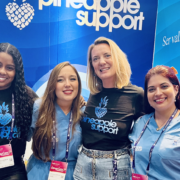
(Photograph from the day Pineapple Support launched at EXXXOTICA Denver.)

With love,

Leya

Key Values – What Are Yours?

Why knowing what matters to you can change everything.

In a world that constantly pulls at our attention, our identity, and our emotional energy—especially in the adult industry—it’s easy to lose sight of one simple truth:
You are allowed to decide what matters most to you.

Your values are the quiet compass beneath all the noise. They’re not the rules you were given by your family, society, or online strangers. They’re not the labels people project onto you. They’re the core beliefs that shape how you move through the world, how you show up in your work, and the way you care for yourself and others.

At Pineapple Support, we talk a lot about mental health, resilience, and community—but values are the thread that ties all of it together. When you know what your values are, decisions feel clearer, boundaries feel stronger, and life feels a little less like it’s happening to you and a little more like it’s happening with you.

So let’s take a moment to explore them.

Why Values Matter (Especially in This Industry)

Working in the online adult industry often means navigating judgement, stigma, emotional labour, inconsistent income, blurred boundaries, and expectations that don’t always reflect your truth.
This is why grounding yourself in your values isn’t just helpful—it’s protective.


Values give you:

Direction

When life feels overwhelming, values point you toward the next right step.

Stability

They anchor you when people misunderstand your choices or when the online world becomes too loud.

Self-Respect

Values allow you to honour who you are without apology—even when others try to shame or minimise your experiences.

Connection

When you live in alignment with your values, the relationships you build become more authentic, supportive, and nourishing.

Common Values We See in Our Community

There is no right or wrong here. Your values are yours. But over the years, we’ve heard creators and professionals share many themes:

Autonomy – “My body, my choice, my work, my boundaries.”

Authenticity – Showing up as your real, imperfect self.

Security – Emotional, financial, physical, digital.

Creativity – Expressing yourself freely and unapologetically.

Connection – Wanting meaningful relationships despite the stigma.

Growth – Striving to heal, learn, and evolve.

Compassion – For others, yes—but also for yourself.

Maybe these resonate with you. Maybe yours are completely different. Both are valid.


How to Discover Your Own Key Values

You don’t need a worksheet or a therapy session (though both help!). Try starting with gentle questions:

1. What moments in your life made you feel proud of yourself?

These often point to a value being honoured.

2. What situations make you feel uncomfortable, angry, or drained?

These often signal when a value is being crossed.

3. What qualities do you admire in people you respect?

Chances are those reflect the values you hold deep down.

4. What do you wish people understood about you?

This is a window into what truly matters.

And remember: Values aren’t goals. They’re the way you want to live while moving toward your goals.


Living Your Values in a Judgemental World

The adult industry is full of challenges that can pull you away from what you believe in. Platforms have rules. Fans have expectations. Society has opinions. Sometimes staying true to yourself feels like an act of rebellion.

But here’s the truth we want you to remember:

Your values deserve space.
Your voice deserves respect.
Your needs deserve priority.

You are allowed to say no.
You are allowed to ask for help.
You are allowed to evolve.
You are allowed to choose yourself.

Living your values isn’t about perfection. It’s about alignment. A little more each day.


A Final Thought

The journey to understanding your values is really a journey toward understanding yourself. It’s a way of building a life that feels good on the inside, not just one that looks good on the outside.

At Pineapple Support, we are here to walk that journey with you.
To listen without judgement.
To support without conditions.
To remind you that your wellbeing matters—because you matter.

So, what are your key values?
Take a moment. Breathe.
And let your answer be honest, imperfect, and entirely yours.

High-Functioning Burnout Is Still Burnout

September was a blur.
XBIZ Amsterdam, TES Prague, Venus Berlin – three countries, three stages, and countless conversations about mental health, resilience, and burnout.

The irony?
I was giving those talks while exhaustion was quietly settling into my bones.
Behind the smiles, the panels, the passion, was a body and mind running on fumes.

That’s the deceptive nature of high-functioning burnout.

It looks like productivity.
It looks like drive.
It looks like having everything under control.

In reality, it hides behind colour-coded calendars, back-to-back flights, and the relentless belief that if I just finish this one last thing, everything will be fine.

It whispers “keep going,” long after your system has nothing left to give.

Many of us in this industry, and in leadership more broadly, have mastered the art of masking. We show up because the work matters. Because people depend on us. Because slowing down feels like letting someone down.

But there is a very fine line between commitment and collapse.

After the September whirlwind, it became impossible to ignore the signs: the foggy thinking, the irritability, the emotional flatness, the bone-deep fatigue that sleep couldn’t touch. I realised the only way forward wasn’t through more pushing, but through pausing.

So October is about recovery; gentle mornings, slower days, fewer flights, and remembering that stillness can be productive, too.

If this resonates with you, take this as your permission slip to pause.

Rest isn’t laziness.
Rest isn’t failure.
Rest is what makes purpose sustainable.

High-functioning burnout rarely looks like falling apart.
More often, it looks like keeping it together so tightly that something eventually snaps.

So before it gets to that point, take a breath. Step back. Give yourself space to reset.

At Pineapple Support and Wellbeing by PS, we talk about this often, the importance of caring for yourself before you care for others. Whether you’re leading a team, creating content, holding space for your community, or simply trying to navigate the chaos of life, your wellbeing isn’t a luxury.

It’s the foundation that holds everything else up.

And like any foundation, it deserves maintenance, compassion, and time to recover.

with love,

Leya

Healing is an Act of Resistance, Defiance, and Rebellion

Healing isn’t just about moving on from pain. It’s about reclaiming who you are.

When you’ve experienced trauma, when you’ve been hurt by people or circumstances that left scars, the journey to heal is rarely straightforward. But each step forward is a declaration: I am not what happened to me. I am becoming me again.

For those of us in the adult industry, the weight is heavier. Society often tells us we should be broken because of the work we do. The stigma, judgment, and shame can feel relentless, a message repeated until it starts to echo inside.

But here’s the truth: choosing to heal from that stigma is an act of rebellion. It’s defiance against every voice that has said you are less worthy of care. It’s resistance against the idea that your story is already written for you.

At Pineapple Support, we see this every day. When someone reaches out for therapy, joins a support group, or even whispers, “I need help,” it is not a sign of weakness. It’s courage. It’s strength. It’s rebellion.

  • Healing from trauma says: I will not let my past define me.

  • Healing from stigma says: I refuse to carry shame that isn’t mine.

  • Healing from society’s judgment says: I choose my own narrative.

And perhaps most beautifully, when you begin to heal, you don’t just transform your own life. You give others permission to heal too. Your resilience ripples outward, strengthening the community, building connection, and breaking cycles of silence.

That’s why Pineapple Support exists. To stand beside you as you heal. To provide the space, the care, and the resources to remind you that you are not broken.

You are loved. We are listening. You are not alone.

Because in a world that profits from our exhaustion and stigmatizes our struggles, healing is not passive. Healing is powerful. Healing is rebellion.

Love and Pineapple hugs,

Leya

Justification vs. Understanding: A Mental Health Perspective on Self-Work

When we start doing the work to improve our mental health, whether that’s through therapy, self-reflection, support groups, or just trying to be better humans, there’s a trap many of us fall into: justifying our behavior instead of understanding it.

At first glance, they can look similar. Both involve looking at our past and examining why we act or feel the way we do. But one leads to growth. The other keeps us stuck.

What’s the difference?

  • Justification says: “I behave this way because this happened to me, and that’s just how I am.”
  • Understanding says: “This is where the behavior comes from, but now that I see it clearly, I have the power to change.”

Justification is passive. It can become a shield we hold up when we’re not ready to face the hard work of healing. It’s rooted in survival and defensiveness. Understanding, on the other hand, is active. It opens the door to self-compassion and accountability. It says, “Yes, this hurt me, but I don’t want to keep hurting myself or others because of it.”

Why does this matter in mental health?
Because healing isn’t just about knowing why we are the way we are. It’s about what we do with that knowledge.

  • We can recognize that anxiety, trauma, or rejection shaped our reactions—but still challenge ourselves to respond in healthier ways.
  • We can see how pain informed our coping mechanisms, without excusing harmful behavior or getting stuck in victimhood.
  • We can validate our emotions, while also taking responsibility for our actions.

Mental health work is not about blaming ourselves, nor is it about blaming others forever. It’s about taking ownership of our healing journey. That means asking: “Am I using my past as a reason to stay the same, or as a reason to grow?”

From awareness to action
Understanding doesn’t mean we get it right every time. Growth is messy. It’s okay to struggle. But when we move from justification to understanding, we unlock our ability to make new choices. We become more emotionally available, more compassionate, and more capable of living lives that align with who we want to be, not just who we’ve had to be.

So next time you catch yourself saying, “That’s just how I am,” take a breath. Ask yourself, “Is this helping me grow, or is it keeping me stuck?” You deserve the kind of healing that leads to freedom, not just familiar pain.

Embracing Shadow Work: A Journey Through Neurodivergence and Self-Discovery

Shadow work—this concept of exploring the parts of ourselves we often avoid or suppress—has been one of the most transformative tools in my personal growth journey. If you’re unfamiliar with it, shadow work is about facing the “shadow”—the parts of ourselves we tend to reject, ignore, or push down because they feel uncomfortable or don’t fit into our ideal narrative. For many neurodivergent individuals, like myself, this work can be especially profound, uncovering not just personal struggles, but also the unique gifts that come with living with autism and ADHD.

Understanding the Shadow
At its core, shadow work involves examining those suppressed aspects of our psyche—our fears, vulnerabilities, behaviors, and emotions—that we usually don’t want to face. In my experience, these “shadows” are deeply tied to how I perceive and navigate the world as someone with ADHD and autism. Often, the world has a set expectation for how we should behave, think, and respond, and when we fall outside of those norms, it can feel like we’re not measuring up.

For those of us with ADHD or autism, these “shadow” qualities might include traits like impulsivity, hyperfocus, sensory overload, or social struggles. They are not flaws but ways of experiencing the world differently, and much of the shadow work I’ve done has been focused on learning to see these qualities in a new light.

The Power of Self-Reflection
Before I started doing shadow work, I viewed many of my neurodivergent traits as imperfections. My inability to stay focused on one task for long, my intense emotional reactions, or the way social situations drained me felt like things I needed to “fix.” I spent years trying to make myself fit into a mold that just wasn’t designed for me.

Through shadow work, I’ve come to realize that those qualities aren’t mistakes to correct—they are part of who I am, and they can be powerful assets if I learn to embrace them. Shadow work doesn’t just help us confront the parts of ourselves that we wish weren’t there; it encourages us to accept them, to understand where they come from, and to find ways to work with them rather than against them.

My Personal Journey
I’m still on this journey, but I’ve learned that my neurodivergence isn’t something I need to be ashamed of. It’s a unique way of experiencing and interacting with the world, and shadow work has helped me appreciate that. For example, when I’m hyperfocused on a task, I’ve learned to see it as a strength instead of something to feel guilty about. Rather than forcing myself to “snap out of it” when I get absorbed in something, I’ve learned to allow it and use it to my advantage.

On the flip side, when I feel overwhelmed by sensory input or emotional overload, shadow work encourages me to acknowledge these feelings without judgment. I no longer push them down, and instead, I take time to ground myself and process what’s happening in my mind and body. These moments of self-compassion are key to integrating my neurodivergent traits into my life in a healthy way.

How Shadow Work Can Help
Shadow work isn’t a quick fix, but with patience and practice, it can help you reframe how you see yourself and your challenges. Here are a few suggestions if you’re interested in exploring shadow work for yourself, especially if you’re navigating ADHD or autism:

  1. Acknowledge and Accept Your Traits: Start by recognizing the traits you may have been taught to suppress or view negatively. For example, if you have ADHD, embrace your creativity and ability to think outside the box instead of focusing on “lacking focus.” If you’re autistic, celebrate your attention to detail and deep focus on subjects that matter to you.
  2. Journaling and Reflection: Writing down your thoughts and feelings can be an effective way to understand your shadows. When you notice feelings of shame, frustration, or inadequacy, write them down and explore why they came up. What triggered those emotions? What part of your neurodivergence is tied to them?
  3. Be Compassionate with Yourself: Shadow work requires a lot of self-compassion. There will be moments where it feels uncomfortable or where you wish you could change aspects of yourself. But instead of pushing those feelings aside, sit with them and try to understand them. Be patient with yourself as you navigate the process.
  4. Seek Support: If you find shadow work difficult, especially when it comes to deep-rooted feelings of shame or misunderstanding, consider seeking professional support. A therapist or counselor who understands ADHD, autism, and shadow work can help you navigate the emotional landscape of these complex feelings.
  5. Celebrate Progress, Not Perfection: Remember, shadow work is a lifelong process. Some days, it will feel overwhelming. Other days, you’ll make huge strides. Celebrate the progress, no matter how small, and acknowledge the courage it takes to face your shadows.

Final Thoughts
Shadow work has taught me that I don’t have to change who I am to be worthy of love, acceptance, and understanding. The parts of me that once felt like burdens are now opportunities for growth. Autism and ADHD are not flaws—they are ways of navigating the world that are just as valuable as any other. Shadow work has helped me embrace my neurodivergence and integrate it into my life, not as something to fix, but as something to understand and appreciate.

If you’re on a similar journey, I encourage you to explore your own shadows with kindness, patience, and an open heart. The process of self-discovery can be transformative, and with time, you’ll see the beauty in the very traits you once thought were “too much” or “too little.” You are enough, just as you are.

With love,

Leya

Parenting as an Adult Industry Professional: Navigating Stigma and Strengthening Bonds

Parenting is a complex and challenging role that requires love, patience, and resilience.

For sex workers who are parents, these challenges are often compounded by societal stigma, legal issues, and the need for discretion. However, many adult industry professionals manage to navigate these obstacles with grace, ensuring their children grow up in nurturing and supportive environments. This blog explores the unique experiences of parents, who are also adult industry professionals, highlighting the realities they face and the strategies they employ to balance their profession with their caregiving responsibilities.

Understanding the Challenges

Sex workers who are parents often face a unique set of challenges, including:

Stigma and Judgment: Society often views sex work through a lens of moral judgment and prejudice, leading to widespread discrimination. This stigma can affect every aspect of a sex worker’s life, from social interactions to employment opportunities in other fields. The judgment often extends to their children, who may face bullying or exclusion due to their parent’s profession.

Secrecy and Safety: Maintaining confidentiality about their profession is crucial for many, to protect themselves and their families from harm or social ostracism. This secrecy can create a barrier between parents and their children, making it challenging to foster open and honest relationships.

Legal Concerns: In many places across the world, sex work is criminalized, creating significant legal risks. These legal ramifications can significantly disrupt family stability. Navigating a legal system that repeatedly discriminates against sex workers can be daunting and requires careful planning and awareness.

Emotional Labor: Balancing the emotional demands of work within the adult industry and the emotional needs of parenting can be exhausting. The dual roles require a significant amount of emotional labor and compartmentalization, which can take a toll on the mental health of parents.


Strategies for Navigating Parenthood

Despite the challenges, many adult industry professionals find ways to thrive as parents. Here are some strategies they employ:

Building a Support Network: Creating a reliable support system is crucial. This network can include friends, family, and other industry professionals who understand the unique challenges they face. Support groups specifically for sex worker parents can offer a safe space to share experiences and advice, reducing feelings of isolation and providing practical help.

Education and Advocacy: Educating themselves and their children about sex work can demystify the profession and reduce internalized stigma. This involves age-appropriate discussions with their children to foster understanding and acceptance. Advocacy for sex worker rights can also create broader societal change, making it safer and more acceptable for adult industry professionals to be open about their careers.

Open Communication: Maintaining open, age-appropriate honesty with children about their profession can foster trust and reduce feelings of secrecy. Many adult industry professionals choose to explain their job in terms children can understand, emphasizing safety, consent, and the importance of respecting others’ choices. This transparency can help children feel more secure and less confused about their parents’ work.

Legal Precautions: Understanding the legal landscape and taking proactive steps to protect their rights as parents is essential. This might involve consulting with legal professionals who specialize in sex worker rights and family law. Having a clear legal strategy can help mitigate risks related to custody and other legal challenges.

Self-Care: Prioritizing self-care is crucial for managing the stress of dual roles. This can include therapy, mindfulness practices, and setting boundaries to ensure they have time to recharge. Self-care enables parents to maintain their emotional well-being, which is essential for providing stable and loving care to their children.


Strengthening the Parent-Child Bond

Despite the challenges, the bond between parents and their children can be incredibly strong. Many sex workers bring unique strengths to their parenting:

Resilience and Adaptability: The resilience required to navigate the challenges of sex work can translate into parenting. Parents often model adaptability and perseverance for their children, demonstrating how to overcome adversity and remain steadfast in the face of challenges.

Empathy and Understanding: The experience of facing stigma can make parents more empathetic and understanding. They often instill these values in their children, fostering a compassionate and accepting family environment. This empathy extends to teaching children to be non-judgmental and supportive of others.

Advocacy Skills: Many sex worker parents are skilled advocates, both for themselves and for broader social change. These advocacy skills can empower their children to stand up for themselves and others, teaching them the importance of fighting for their rights and the rights of others.


Parenting as an adult industry professional involves navigating a complex web of challenges, but it also offers unique opportunities for personal growth and family bonding. By building supportive networks, advocating for their rights, and fostering open communication with their children, sex worker parents create loving and stable homes.

It’s essential to recognize and respect the resilience and dedication these parents bring to their roles, challenging societal stigma and working towards a more inclusive and understanding world. Through their strength and advocacy, parents not only provide for their families but also contribute to the broader fight for acceptance and equality.


If you want like-minded people to talk to, why not join one of our Support Groups. You can sign up here.

Photo by Markus Winkler on Unsplash

Confessions of a Millennial Step-mom

Zelena van der Leeden, MC, CDC® and Jake W. Purdy, PMP, CDC® are the Co-founders of Divorce Management, the first multi-lingual divorce coaching firm in North America. Divorce Management operates on a “pay what you can” model offering certified Divorce Coaching and Divorce Transition and Recovery Coaching. Further details can be found on their website.


When I was little, my biggest fear was that my mom would die and that my dad would remarry an evil woman: I did not want to end up like Cinderella or Snow White! I hated Meredith from the Parent Trap and I cried myself to sleep for days after watching Stepmom (both released in 1998 when I was 13). My parents stayed together until I was a young adult, so I never had a wicked stepmom, but I did become one…

I got married young and had the perfect Disney family for a while, but dad and I separated when my babies were 2 and 4. Being a single parent was the most difficult and enriching experience of my life. I bonded deeply with my children and I will forever cherish the times when it was just the three of us. When the kids were with dad, I traveled as much as I could and I spent a lot of time alone. It was during this time when I figured out who I really was and what I truly wanted out of life.

I did not plan to meet my fiancé and business partner while going through a divorce (he was going through one too!), but I believe we were meant to be together. We did not want to introduce ourselves to our respective children, but on a rainy day, we bumped into each other at the only indoor play structure in the neighborhood. We told the kids we were friends and they played together for hours (they were 4, 5, 6 and 7 at the time).

Motherhood is a never ending job and we learn to adapt our parenting tactics as we all grow. I have been a step-mom for over 2 years and it has been a fun and wild ride! When you parent your own children, you allow yourself to fully express your emotions, but when you are a step-mom, you second-guess your every move: am I too strict? Too lenient? Will they think I am trying to replace their mom? What should they call me?

I always consult with experts when I have doubts and we were told to be our authentic selves and to follow the children’s lead. Children respond to love and that is what we did. We never forced them to call us by a specific name or title and we treat them all the same way. They also look alike, so when we go out people think they are biological siblings and the kids don’t like it when we correct them, so we just play pretend during short interactions. They love to pretend they are two sets of twins when strangers start asking too many questions and we always share a good laugh afterwards.

My biological kids also have a step-mom and they love her. She loves doing crafts and baking, (two things I suck at), which is why I love the term “bonus mom”. Movies have turned most step-moms into villains or slutty milfs, but to me, we are just a bit of extra love and attention. Who wouldn’t want that for their kids? And yes, I am aware that there are some evil step-parents out there, but there are also abusive and neglectful biological parents. Most of humanity is good, so let’s not focus on the few that give a bad rep to the rest of us.

There is no competition, there is no replacement. If you are a step-parent and you truly love your step-children, tell them. Spend time bonding with them and don’t be afraid to discipline them, but stay true to yourself. Don’t try hard! Be patient and kind and time will take care of the rest.


Written by: Zelena van der Leeden, co-founder of Divorce Management

© Divorce Management 2024


Apply for subsidized therapy with Pineapple Support here.

Photo by Kylo on Unsplash